


44 speakers addressing the Global Aviation Issues Conference (GAIC)
Massive crowds at Airport Innovation Hub and Innovation Trail
Future GSE Display and Startups Hub became a big draw
Saudi companies ink MoU for aviation fuel-handling equipment
TDC and WBG to collaborate on selected projects in the kingdom
The kingdom aims to be the best global aviation hub
Riyadh : An unprecedented interest by stakeholders in Saudi Arabia’s fast-expanding aviation ecosystem has been abundantly reflected at the 4thGlobal Airports Forum (GAF) that was opened today by Raed bin Hassan Al-Idrissi, CEO of MATARAT Holdings which operates 27+ international and domestic airports in the country and has been working to transform them into world-class hubs by boosting their capacity, efficiency, and passenger experience.
The two-day airport industry B2B platform comes at a time when all the stakeholders of the airport industry in the kingdom are acquiring digital tools to offer passengers a personalized and technologically advanced experience.
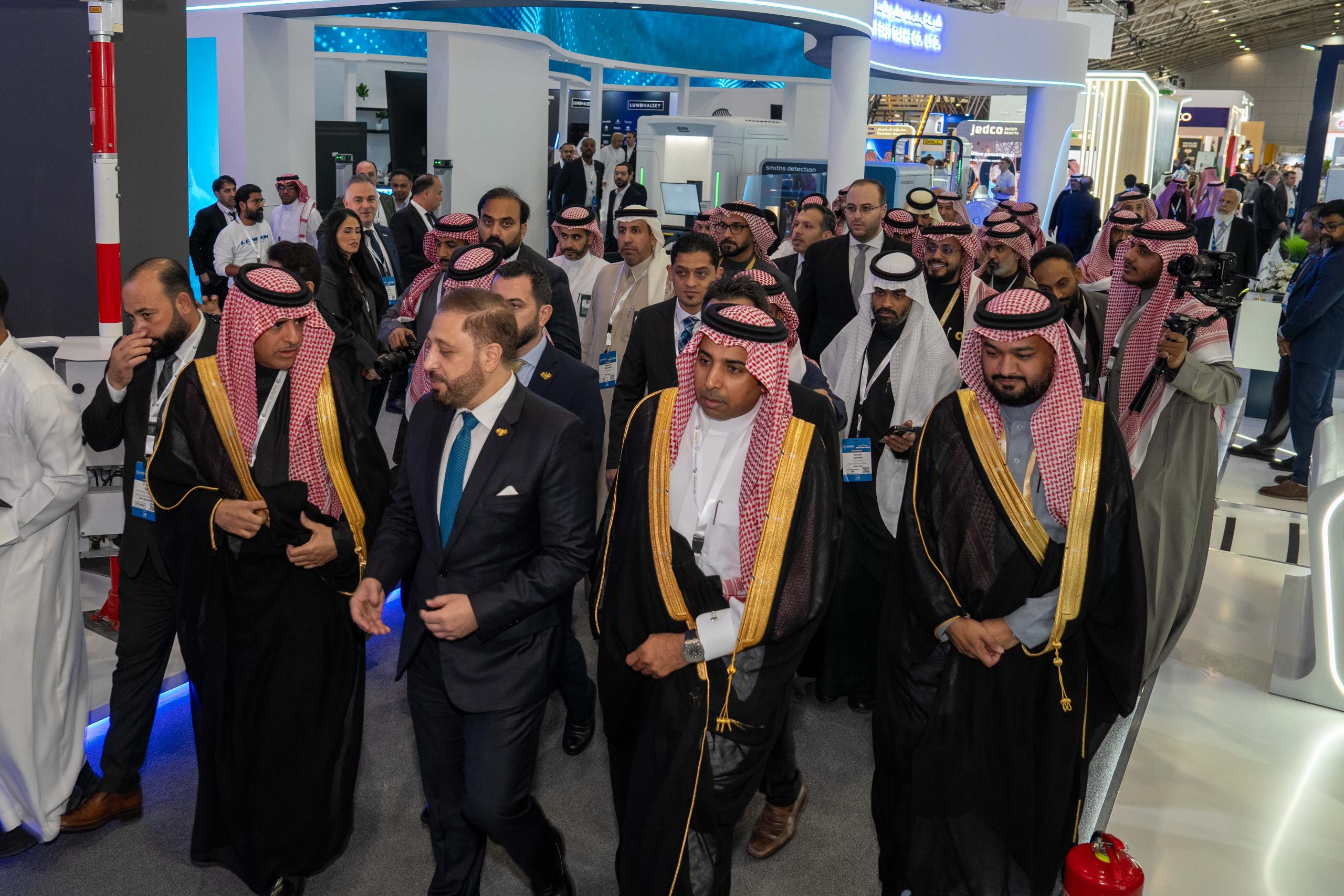
Accompanied by senior officials and visiting dignitaries, he toured the GAF being held at the four spacious exhibition halls at the Riyadh International Convention and Exhibition Centre (RICEC) with participation of 300+ exhibitors from 50+ countries. The top-ranking airport industry official also spends time at the four new features introduced this edition – Airport Innovation Hub, Airport Innovation Trail, Future GSE Display, and the Startups Hub.
Speaking at the opening session of the Global Aviation Issues Conference (GAIC) examining the aviation industry’s growth prospects and its expansion potential in the Arabian Peninsula’s largest country, Raed Al-Idrissi said the airports across the kingdom handled 140 million passengers in 2025, benefitting from the expansion and improvement projects taken up as part of the US$100 billion set to be invested in 2030 to enable the kingdom become a global aviation and logistics hub.
He utilized the hugely attended gathering of aviation industry decision-makers to enlighten them about the performance of the key Saudi airports and their expansion projects underway or planned for launch in the near future. He said MATARAT has been working to facilitate and oversee the development of airports by adopting best-in-class Private Sector Participation (PSP) models and attracting local and international investors to achieve outstanding customer experience, efficient operations, sustainable infrastructure, and distinctive value to all stakeholders.
“Our vision is crystal-clear. We are determined to transform and promote airports by leading the privatization of a new, sustainable, and thriving industry. We are committed to the steady development of all our assets. Saudi Arabia is the place where opportunities are flourishing and will be successful,” he remarked.
Speaking at the GAIC’s inaugural session, Omar Al Hosari, President at Syria’s General Authority of Civil Aviation, provided insights into the revival and revitalization of civil aviation infrastructure in the war-ravaged country.
“ My country is going through a defining moment in its aviation history. We are not rebuilding our aviation infrastructure but working to create truly innovative infrastructure and systems that are compatible with the changing times and meet future needs. We are working to bring the two airports, Damascus and Aleppo, to their former glory.”
Eng. Aiman Arab, Chairman, Egyptian Holding Company for Airports and Air Navigation (EHCAAN), briefed the participants about how Egypt has been significantly expanding Cairo International Airport by announcing in October 2025 the new project, the US$3.5+ billion Terminal 4 to boost capacity to over 60 million passengers annually from 28 million, utilizing smart tech, a new runway, and green features, aiming to solidify Egypt as a regional aviation hub by 2029.
In 2024, Egypt’s airports handled over 50 million passengers, with Cairo and Hurghada airports showing strong increases driven by tourism recovery and infrastructure upgrades, supporting the country’s goal of attracting 30 million tourists by 2030.
Dr Badr Al Aydi, Chairman of the Aviation Department at the Prince Sultan University (PSU), the first and only university in Saudi Arabia offering an aviation management course since 2014, in his presentation, shared insights into the aviation industry’s growth in the kingdom and how PSU has been working to provide qualified manpower for the transformation. He remarked: “ The Saudi aviation strategy is not only built on world-class infrastructure but also on world-class human capital.”
Earlier, Heba Gouda, Vice President for Global Operations at the American Association of Airport Executives (AAAE), explained the factors behind holding the GAIC in Riyadh in association with the Niche Ideas, organizers of GAF. The first-day of the show witnessed the signing of MoUs by participating companies.
Arabian Petroleum Supply Company (APSCO), a Saudi Arabia-based supplier of Mobil-branded lubricants and marketer of aviation fuels, Refuel International (Australia), a global manufacturer and supplier of specialized refueling vehicles, equipment and support services primarily to the Aviation industry, and Saudi Automotive Manufacturing Company (SAMCO) have signed a Memorandum of Understanding (MoU) to jointly explore the manufacturing of the advanced Aviation Fuel-handling and Refueling equipment in the kingdom.
No details have been revealed immediately by the organizations. Saudi Arabia is committed to increasing the use of Sustainable. Aviation Fuel (SAF) as part of its broader environmental strategy. Saudi airlines, including Saudia, Riyadh Air, Flyadeal, and Flynas, are already investing in fuel-efficient next-generation aircraft. In 2023, the government implemented a regulation mandating that all domestic airlines must blend at least 10 percent of renewable aviation fuel in their total fuel consumption.
This initiative aims to enhance sustainability in the aviation sector and aligns with the Vision 2030 goals to diversify energy sources and reduce greenhouse gas emissions. The kingdom’s aviation fuel needs are shifting significantly towards SAF but still relying heavily on traditional jet fuel. Key players like APSCO manage existing fuel infrastructure.
Local production and new tech aim to reduce import reliance and cost barriers. SAF is a lower-carbon alternative to traditional jet fuel, designed to reduce greenhouse gas lifecycle emissions. The kingdom’s Aviation Fuel market is expected to reach a market size of more than US$2.25 billion by 2029 due to the advancing aviation sector. Saudi airlines are working towards having a fleet of 381 commercial aircraft by 2030.
The Technical Development Company (TDC) and Western Baynounah Group (WBG) have signed a cooperation agreement to jointly collaborate on selected projects in the Kingdom. The signing ceremony marked the beginning of a strategic partnership that brings together TDC’s strong local market knowledge and project execution capabilities with WBG’s regional expertise and experience.
The collaboration aims to support the delivery of high-quality, efficient, and sustainable projects in line with the kingdom’s development objectives. Through this partnership, both companies reaffirm their commitment to delivering prestigious and high-impact projects that contribute to the Kingdom’s evolving infrastructure and economic growth.