


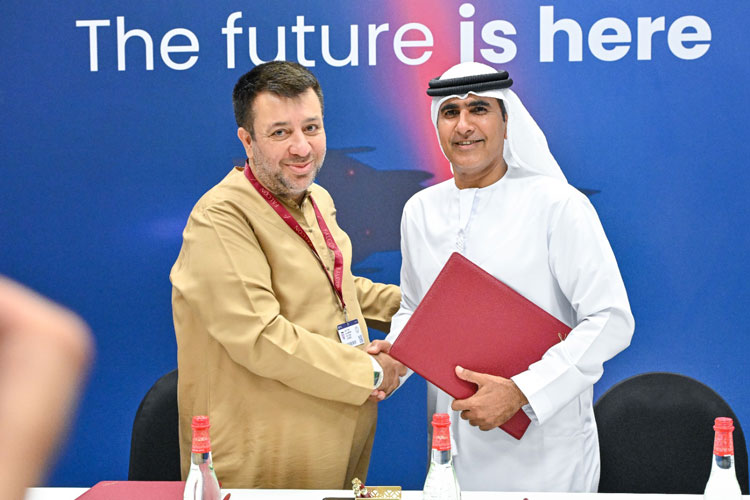
Ras Al Khaimah International Airport VVIP Terminal is set to become a significant addition to the Northern Emirates’ aviation infrastructure, following the announcement of a new private aviation facility at Dubai Airshow 2025. Developed through a collaboration between Ras Al Khaimah International Airport and Falcon Executive Aviation, part of Alex Group Investment, the project will introduce a dedicated VVIP terminal, a multi-purpose private jet hangar and extensive aircraft parking facilities.
Announced on 24 November 2025, the development forms part of Ras Al Khaimah’s wider ambition to strengthen its position as an international tourism and entertainment destination. The proposed facility will provide a dedicated gateway for high-profile travellers, investors and private aviation clients visiting the Emirate, while expanding the airport’s capabilities to accommodate specialised private aviation requirements.
The project will include a 1,500-square-metre terminal, an 8,000-square-metre multi-purpose hangar and 9,000 square metres of apron and aircraft parking areas. Located approximately 15 minutes from Ras Al Khaimah’s leading beach resorts and the forthcoming Wynn Al Marjan Island integrated resort, the development is intended to connect premium aviation services with the Emirate’s growing hospitality offering.
Construction is scheduled to take place over 15 months, with the facility expected to open in the first quarter of 2027. Alongside luxury passenger facilities and private aircraft support, the project will incorporate sustainability measures, including planned solar energy generation, electric ground support equipment and provisions for sustainable aviation fuel.
A Strategic Investment in Ras Al Khaimah’s Aviation Future
The announcement represents an important step in the development of Ras Al Khaimah’s aviation infrastructure. By introducing a dedicated Fixed Base Operation (FBO) facility, the airport and its partner aim to strengthen the Emirate’s capacity to serve private aviation customers seeking privacy, efficiency and personalised service.
An FBO is a specialised aviation facility that supports private and business aircraft and their passengers. Depending on its services, it can provide dedicated passenger lounges, aircraft parking, ground handling and operational support. Such facilities serve travellers who require a more tailored airport experience than conventional commercial passenger terminals typically provide.
The planned development at Ras Al Khaimah International Airport will bring these elements together in a purpose-designed environment. Its combination of passenger accommodation, aircraft hangar space and apron facilities is intended to address both the hospitality and operational needs of private aviation.
The project also reflects a broader connection between aviation infrastructure and tourism development. High-end travellers may seek direct and convenient access to resorts, hospitality destinations and private leisure experiences. A dedicated VVIP facility can help create a more seamless arrival and departure experience for this audience.
For Ras Al Khaimah, the development is positioned as part of a wider strategy to diversify the economy and expand its international reach. The Emirate’s tourism offering includes beach resorts and natural attractions, while the planned Wynn Al Marjan Island integrated resort represents another major element of its forthcoming hospitality landscape.
By combining specialised aviation services with access to these destinations, the new facility is intended to strengthen the connection between private aviation and premium tourism. Its role will extend beyond providing a terminal building, creating a dedicated entry point for visitors who value privacy, convenience and personalised service.
The airport’s collaboration with Falcon Executive Aviation also brings together airport infrastructure and private aviation expertise. The partnership will be responsible for developing and operating the facility under the announced agreement, supporting the project’s objective of establishing a specialised service offering for the Northern Emirates.
A Dedicated Gateway for VVIP Travellers
At the heart of the development will be a luxurious 1,500-square-metre terminal designed around the needs of high-profile passengers. The planned interiors will include a Royal lounge, four VVIP lounges and premium hospitality areas, creating dedicated spaces for travellers who require privacy and a more personalised airport experience.
The terminal’s layout is intended to offer an environment that differs from the busier spaces associated with conventional passenger processing. Dedicated lounges and hospitality areas can provide private settings for passengers to relax, meet guests or prepare for their onward journeys.
For VVIP travellers, the quality of an airport experience is influenced by more than the appearance of the building. Privacy, efficient movement through the facility, attentive service and appropriate coordination with aircraft operations all contribute to a smoother journey. The planned terminal is intended to bring these considerations together in one location.
The development will incorporate the Falcon Signature Experience, the company’s stated service concept for delivering a high level of privacy, efficiency and personalised attention. The project announcement presents this approach as a defining part of the facility’s hospitality offering.
The inclusion of a Royal lounge and four VVIP lounges also creates the potential for different levels of privacy and guest accommodation within the terminal. However, the final service arrangements, access conditions and detailed passenger procedures have not yet been outlined in the announcement.
The terminal will be supported by the wider airside infrastructure, including aircraft parking areas and a helipad. These facilities are intended to support private aviation operations while providing space for emerging vertical mobility solutions.
Together, the planned passenger and airside elements will form a specialised environment for private aviation users. The objective is to deliver an arrival experience that reflects Ras Al Khaimah’s hospitality ambitions while meeting the operational requirements of high-value travellers.
Private Jet Hangars Designed for Advanced Aviation Requirements
Beyond the passenger terminal, the development will include an 8,000-square-metre multi-purpose hangar designed to accommodate a range of private aircraft, including ultra-long-range jets.
Private jet hangars provide sheltered space for aircraft and can support a variety of operational activities. Their design must take account of aircraft dimensions, access requirements and the practical needs of aviation operations. The planned hangar complex at Ras Al Khaimah International Airport is intended to meet the requirements of a diverse private aviation clientele.
The announcement states that the hangar complex will provide maintenance and operational capabilities designed to meet high international benchmarks. Further technical details, including the precise scope of maintenance services and the aircraft types that can be accommodated, have not yet been specified.
The project will also include 9,000 square metres of apron and aircraft parking areas. These spaces will support aircraft movement and parking around the facility, complementing the hangar and terminal buildings.
The apron is a key part of the overall development because the facility must serve both passengers and aircraft. A well-integrated arrangement of hangar space, parking areas and passenger facilities is important to the practical operation of an FBO.
The planned helipad adds another dimension to the site’s aviation infrastructure. In addition, space will be allocated for emerging vertical mobility solutions, indicating that the development is being planned with potential future aviation applications in mind.
The reference to vertical mobility reflects the project’s forward-looking approach, although the announcement does not identify specific aircraft, operators or launch dates for these future applications. Their eventual role will depend on the relevant operational, regulatory and infrastructure requirements.
By combining a dedicated terminal with hangar space and extensive aircraft parking, the development is intended to offer an integrated private aviation environment rather than a passenger facility operating in isolation.
Falcon Executive Aviation and Alex Group Investment Expand Their Presence
Falcon Executive Aviation, part of Alex Group Investment, is the airport’s partner in developing and operating the new FBO facility. The agreement represents an expansion of Alex Group Investment’s private aviation activities into Ras Al Khaimah.
Sultan Rashit Abdulla Rashit Al Shene, Founder and Chairman of Alex Group Investment, described the expansion as a significant step in the group’s long-term vision to elevate private aviation services across the UAE.
He said the facility had been designed to match the growth and ambition of the Northern Emirates, bringing together luxury, operational capability and advanced sustainability standards. He also highlighted the work of the group’s teams and its commitment to developing infrastructure that supports the next phase of aviation in the region.
The development will complement Alex Group Investment’s existing services at Dubai Al Maktoum VIP Terminal, strengthening the group’s presence across the country.
The expansion reflects an approach in which private aviation services are developed in response to the requirements of different destinations. Ras Al Khaimah’s tourism and hospitality landscape gives the proposed facility a distinct role, while the group’s existing presence at Dubai Al Maktoum provides another part of its UAE network.
For the airport, the partnership provides a dedicated operator for the proposed facility. For Falcon Executive Aviation and Alex Group Investment, the project creates an opportunity to serve private aviation customers visiting the Northern Emirates.
The final customer offering will depend on the completed facility, the services made available and the operational arrangements established before opening. Nevertheless, the agreement sets out a framework for developing a dedicated FBO that combines passenger hospitality with private aircraft support.
Supporting Ras Al Khaimah’s Tourism and Entertainment Ambitions
The VVIP terminal and hangar development is closely linked to Ras Al Khaimah’s ambition to strengthen its position as a global tourism and entertainment hub.
The Emirate has established a hospitality offering centred on beach resorts and leisure experiences, while the forthcoming Wynn Al Marjan Island integrated resort is expected to add another prominent destination to its tourism landscape. The airport announcement states that the planned FBO will be approximately 15 minutes from leading beach resorts and the forthcoming resort development.
This proximity is a key element of the project’s positioning. For travellers arriving by private aircraft, access to a dedicated terminal close to their intended destination can be an important part of the overall journey.
A specialised aviation facility can also serve a wider range of visitors, including business travellers, investors and partners attending meetings or exploring opportunities in the Emirate. By improving the range of services available to private aviation users, the project aims to strengthen the airport’s role in supporting tourism and economic activity.
The airport’s location also offers a wider geographic advantage. According to the announcement, Ras Al Khaimah is within four hours’ flying time of one third of the world’s population. This positioning is presented as a factor supporting the Emirate’s appeal to international travellers and private aviation customers.
The statement provides a broad indication of the potential reach of the destination, rather than a guarantee of direct connections or specific travel times for individual routes. Actual journey duration will vary according to the point of departure, aircraft type and operating conditions.
The facility is expected to generate a positive economic impact for the Emirate. Potential benefits may be associated with construction, aviation operations and increased activity around the tourism and hospitality sectors, although the announcement does not provide a quantified forecast for jobs, investment returns or visitor numbers.
The project therefore forms part of a broader effort to connect aviation infrastructure with the Emirate’s tourism ambitions. Its success will depend on the development being completed as planned and on the demand for the specialised services it is designed to provide.
Sustainability at the Centre of the Development
Sustainability is a central element of the proposed terminal and hangar complex. The project is being designed to achieve LEED Gold certification, with planned measures intended to reduce the environmental impact of the facility’s operations.
LEED is a building certification framework that assesses environmental performance across several areas. The project’s stated aim of achieving Gold certification signals an intention to incorporate sustainability considerations into the design and construction process. Certification remains a target rather than a confirmed achievement at the announcement stage.
One of the proposed measures is to offset 35% of energy consumption through solar power generation. The plan is intended to reduce reliance on conventional energy sources by supplying a portion of the facility’s energy needs through solar generation.
The project also plans to adopt fully electric ground support equipment. Ground support equipment is used to assist aircraft and airport operations while aircraft are on the ground. Using electric equipment can reduce direct emissions from those activities compared with equipment powered by conventional combustion engines, depending on how the electricity is generated and used.
Another element is the planned enablement of sustainable aviation fuel. Sustainable aviation fuel can offer a way to reduce lifecycle greenhouse gas emissions compared with conventional jet fuel, depending on its production pathway and the relevant accounting method. The announcement does not specify fuel suppliers, volumes or the detailed arrangements through which the facility will support its use.
These measures are intended to contribute to the project’s goal of achieving net-zero operational emissions. The stated objective will depend on the final design, energy supply, operating practices and the scope used to measure emissions.
The sustainability programme complements the broader infrastructure ambitions of the project. It signals that the development is intended to combine premium passenger facilities and advanced aviation capabilities with environmental considerations.
As construction progresses, further information about the certification process, solar installations, electric equipment and sustainable aviation fuel arrangements will help clarify how the plans are implemented.
Construction Timeline and Expected Opening in 2027
According to the announcement made at Dubai Airshow 2025, construction of the new VVIP terminal and hangar facility is scheduled to take place over the following 15 months. The planned opening date is the first quarter of 2027.
The development timeline covers a project that includes several connected components: the terminal, the multi-purpose hangar, apron and aircraft parking areas, and supporting aviation infrastructure. Coordinating these elements will be important to preparing the facility for operation.
The terminal will provide passenger-facing services, while the hangar and apron will support aircraft accommodation and operational activity. The helipad and space for future vertical mobility solutions add further infrastructure considerations to the development.
Before opening, the facility will need to be completed and prepared for its intended operational role. The announcement does not provide detailed construction milestones, phased opening plans or a confirmed date within the first quarter of 2027.
The proposed opening nevertheless establishes a timeline for the next stage of Ras Al Khaimah International Airport’s development. It also gives the tourism and private aviation sectors a reference point for anticipating the introduction of the new service.
For travellers and aviation customers, the facility’s eventual availability will be determined by the final opening schedule, operational approvals and the services offered at launch. Further announcements are expected to provide more detailed information as the project advances.
A New Gateway for Private Aviation in the Northern Emirates
The planned VVIP terminal and private jet hangars represent a significant proposed addition to Ras Al Khaimah International Airport. By bringing together dedicated passenger lounges, aircraft hangar space, apron facilities and a range of sustainability measures, the project aims to create a specialised environment for private aviation.
The collaboration with Falcon Executive Aviation and Alex Group Investment also establishes an operational partnership intended to support the facility’s development and future management. The project will complement the group’s existing presence at Dubai Al Maktoum VIP Terminal while expanding its reach into the Northern Emirates.
For Ras Al Khaimah, the development is positioned as part of a wider strategy to strengthen international tourism, support investment and enhance the visitor experience. Its location near leading beach resorts and the forthcoming Wynn Al Marjan Island integrated resort is central to that ambition.
The sustainability plans, including solar energy generation, electric ground support equipment and support for sustainable aviation fuel, further indicate an intention to align the development with evolving environmental priorities in aviation.
With construction scheduled over 15 months and an opening planned for the first quarter of 2027, the project now moves towards its next phase. Once completed and operational, the facility is intended to provide a dedicated gateway for VVIP travellers visiting Ras Al Khaimah and the wider Northern Emirates.
The announcement marks a forward-looking investment in aviation infrastructure, linking private aviation services with the Emirate’s tourism ambitions and its efforts to build a more diversified economy. Its eventual contribution will depend on delivery, operational readiness and demand, but the development establishes a clear vision for a more specialised private aviation offering at Ras Al Khaimah International Airport.