



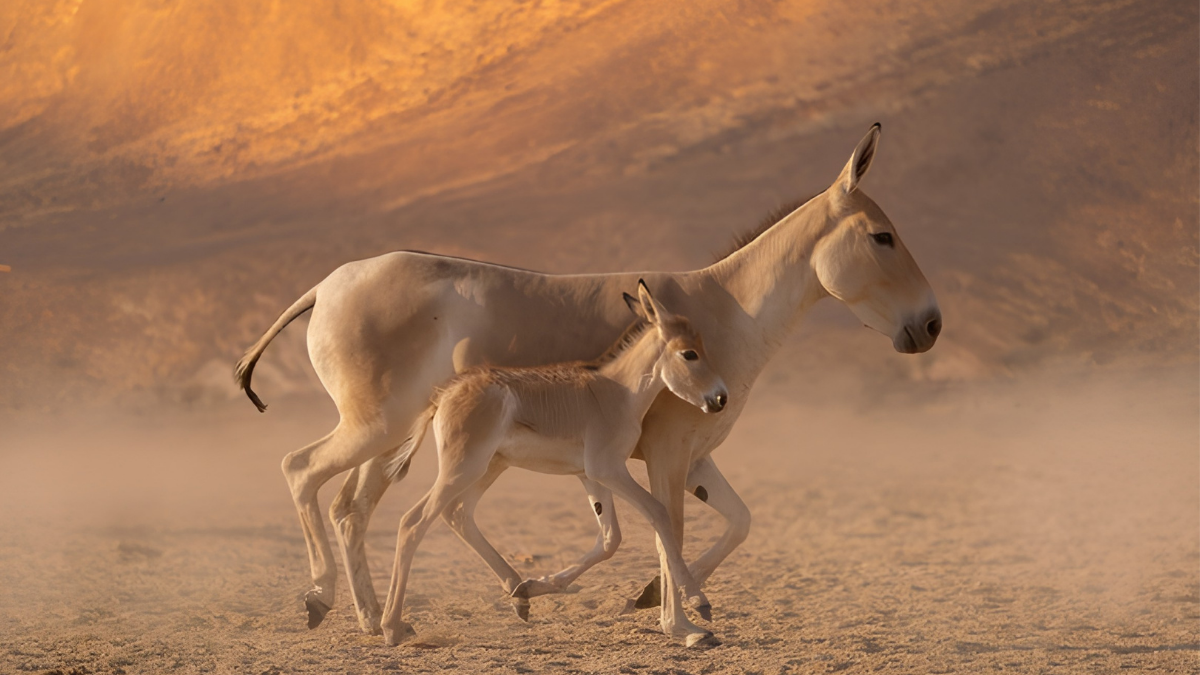
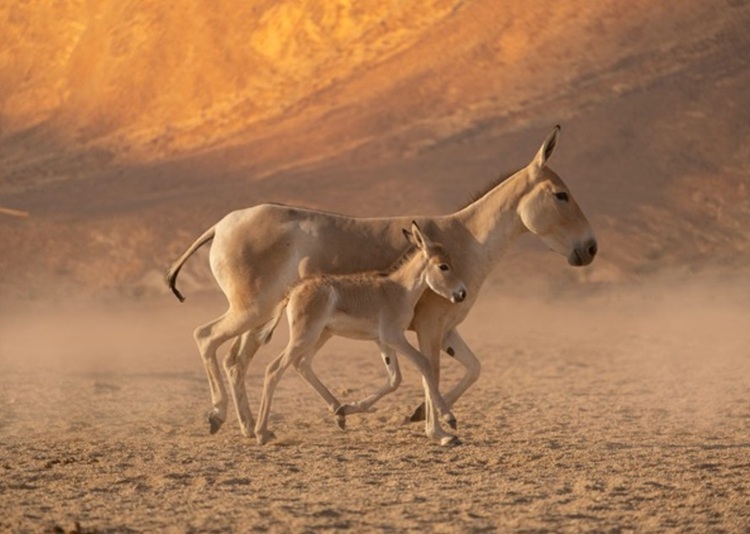
 In a major wildlife conservation milestone, the first Persian onager has been successfully born and bred on Saudi Arabian soil in more than a century at the Prince Mohammed bin Salman Royal Reserve. The birth marks the return of one of the world’s rarest and most endangered animals to the Arabian landscape.
The historic birth highlights the success of Saudi Arabia’s ambitious ReWildArabia conservation programme, aimed at restoring native wildlife species that once roamed the region.
A Historic Wildlife Conservation Achievement in Saudi Arabia
The male Persian onager foal was born in June 2025 as part of the Reserve’s large-scale rewilding efforts. The birth has only now been officially announced after the foal successfully completed its critical first year of life, a major survival milestone for the species.
With only around 600 Persian onagers remaining in the wild globally, the species was officially classified as Critically Endangered by the International Union for Conservation of Nature (IUCN) in 2025.
The survival of this foal represents an important breakthrough, particularly as conservation projections estimate a 90% decline in the onager population by 2050.
What Is a Persian Onager?
The Persian onager is a subspecies of the Asiatic wild ass and one of the oldest surviving members of the equid family, predating horses and zebras by nearly four million years.
Historically, the species and its relatives roamed across the Arabian Peninsula in large herds. However, hunting and habitat destruction eventually drove them to local extinction.
The closest extinct relative, the Syrian wild ass, disappeared from the wild in the early 1920s, making modern conservation efforts increasingly critical.
Why This Birth Is So Significant
The successful birth is considered a major conservation success because onager foals face only a 50% survival rate during their first year.
After nearly 11 months of gestation, newborn foals must stand and nurse within just 15 to 20 minutes after birth to receive vital nutrients essential for survival.
The Reserve has also confirmed that two additional mares are currently pregnant, with births expected later this year, further strengthening hopes for the species’ recovery in Saudi Arabia.
Bringing a Lost Species Back to Arabia
The return of the Persian onager follows a historic wildlife transfer from Jordan in 2024.
In partnership with conservation authorities, seven Persian onagers, five females and two males, were transported over 935 kilometres from Jordan’s Shaumari Wildlife Reserve to Saudi Arabia.
Although early breeding attempts faced challenges, including unsuccessful births and the loss of a mare, conservationists continued their efforts to establish a healthy population.
Today, the Reserve is home to Saudi Arabia’s only onager population, currently consisting of five females and three males, including young sub-adults.
A Symbol of Arabia’s Wild Heritage
The Persian onager is more than a rare species, it is deeply woven into Arabia’s cultural history.
Celebrated in pre-Islamic and early Islamic poetry, the animal symbolised freedom, resilience, and untamed wilderness. Unlike camels or horses domesticated by humans, the onager was admired as an independent creature of the desert.
The species appeared in more than 80 classical Arabic poems, where poets described its speed, endurance, and spirit across the harsh desert landscape.
According to Andrew Zaloumis, CEO of the Prince Mohammed bin Salman Royal Reserve, the birth represents not just a conservation success but the revival of an important cultural symbol of Arabia’s natural heritage.
Saudi Arabia’s ReWildArabia Programme
The onager’s return forms part of the ReWildArabia initiative, an ambitious conservation programme approved by the Reserve’s Board and chaired by HRH Crown Prince Mohammed bin Salman.
The programme aims to reintroduce 23 historically native species to Saudi Arabia’s landscapes. So far, 14 species have already been reintroduced, including:
- Arabian oryx
- Mountain gazelle
- Sand gazelle
- Nubian ibex
- Arabian hare
- Persian onager
Notably, six of these species have already successfully bred within the Reserve.
Conservation teams are now working to improve the genetic diversity of the onager population, including introducing a new mare from Jordan to help establish two separate breeding herds for long-term sustainability.
The Importance of Conservation Partnerships
The success of the programme reflects strong regional conservation collaboration.
The Reserve works closely with Saudi Arabia’s wildlife organisations, academic institutions, and international conservation partners to strengthen endangered species populations and restore ecological balance.
By sharing research, expertise, and breeding efforts, these partnerships aim to ensure the long-term survival of rare native species across the Middle East.
Final Thoughts
The birth of the first Persian onager in Saudi Arabia after more than 100 years marks a defining moment for wildlife conservation in the Kingdom.
As one of the rarest animals on Earth returns to its ancestral habitat, the achievement highlights Saudi Arabia’s growing commitment to biodiversity, ecosystem restoration, and preserving the region’s rich natural heritage for future generations.