



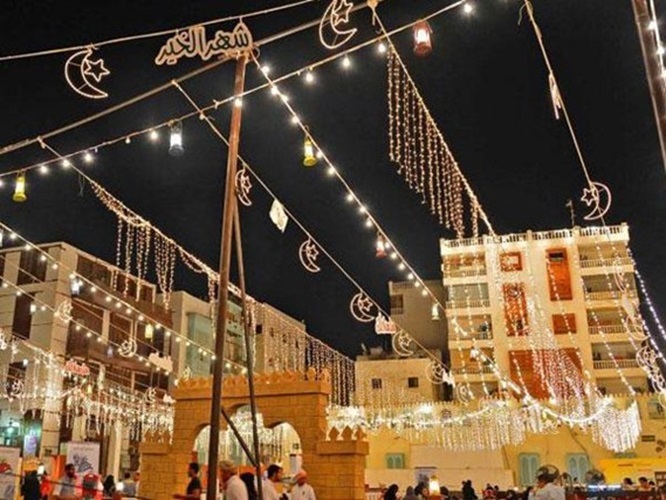
Jeddah : While many cities share similarities, Historic Jeddah stands out, especially during Ramadan. Al-Balad, the old city, takes on new dimensions, enriching experiences and creating a warm, profound atmosphere. Rather than being merely an old neighborhood or an open-air museum, it transforms into a vibrant space where history intertwines with the spirit of the holy month, turning ancient alleyways into living scenes that engage all the senses.
As visitors enter the alleyways of Al-Balad on Ramadan nights, they don’t just witness history—they live it under lantern light, surrounded by the sounds of people after Taraweeh prayers. Historic landmarks like Beit Nassif, Beit Ba’ashan, and Al-Shafi’i Mosque come to life, adorned with the season’s spirit as families and visitors seek solitude or a leisurely stroll in the pleasant evening air.
The distinctive wooden latticework windows, hallmarks of Hijaz architecture, glow warmly under the Ramadan lights, telling stories of generations past. The scene is a harmonious blend of art, memory, and serenity.
Art in historic Jeddah during Ramadan extends beyond galleries; it permeates daily life. Visitors can witness artisans carving wood or weaving palm fronds, vibrant doors caught by photographers, and narrow alleyways that bloom into lively passageways after Iftar. A post-Taraweeh stroll here is a multi-sensory experience, with shadows cast under twinkling lights and sounds creating a lively tableau that reflects community warmth. Handicrafts in this historical setting aren’t just heritage displays—they embody solidarity and connection. Visitors engage with artisans, learning the stories behind traditional crafts passed down through generations, all within the tranquil atmosphere that characterizes Ramadan nights.
The Ramadan experience in Al-Balad intensifies, blending architectural artistry with the scents of perfumery and traditional markets. As Iftar approaches, the aroma of Hijazi dishes fills the air, prepared using cherished recipes that impart unique flavors to the city. Local cafés maintain their simple charm, offering coffee steeped in local spirit, while Hijazi “balila” carts become a staple, and the sound of tea poured into “bayalat” (traditional cups) adds to the daily ritual atmosphere, redefining simplicity and beauty.
What sets Historic Jeddah apart during Ramadan is its invitation to visitors to linger. Here, pausing is integral to the experience. Visitors are encouraged to slow their pace, walk leisurely, and appreciate the small details that contribute to the area’s uniqueness. Between art, craftsmanship, flavors, and the ambiance of the holy month, a visit evolves into a lasting memory, resonating long after the night has ended.
In essence, Historic Jeddah during Ramadan is not just a destination but an immersive experience, where heritage meets the spirit of the month, and taking time to appreciate details fosters a true understanding of the location’s meaning and value.