


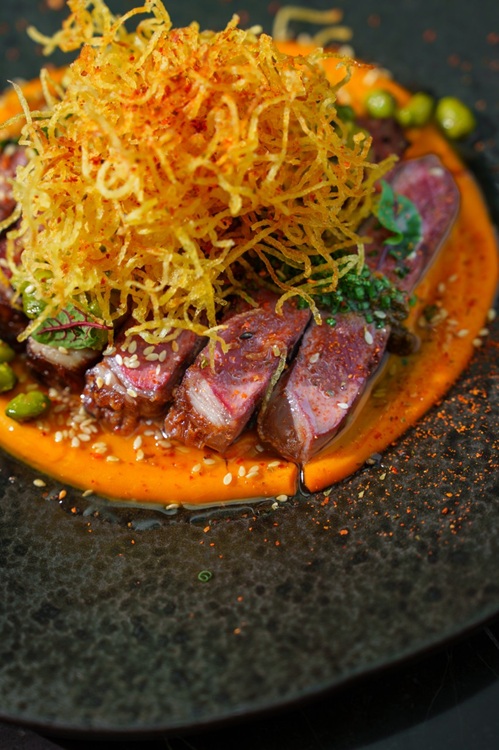
OAnjo Dubai is back, bringing a renewed dining experience to the rooftop of Sheraton Mall of the Emirates. Following a month-long summer closure, the restaurant has reopened with an expanded seating layout, refreshed atmosphere and a new menu celebrating the distinctive flavours of Nikkei cuisine. Combining Japanese culinary precision with Peruvian influences, OAnjo offers guests a contemporary approach to dining in one of Dubai’s most recognisable skyline settings.
Located on the 24th-floor roof level of Sheraton Mall of the Emirates, OAnjo pairs its food offering with panoramic views stretching from Burj Al Arab to Burj Khalifa. Its interiors combine rich marble tables, curved crimson banquette seating and sculptural lighting, creating a setting designed for intimate dinners, social gatherings and special celebrations.
The reopening marks a new chapter for the restaurant. With its refreshed seating arrangement, expressive menu and striking location, OAnjo aims to bring the heritage of Nikkei cuisine into a modern Dubai dining environment. The result is an experience built around distinctive ingredients, inventive combinations and a setting that makes the city’s skyline part of the occasion.
OAnjo’s New Chapter in Dubai’s Dining Scene
Dubai’s dining scene brings together culinary traditions from around the world, giving restaurants opportunities to introduce guests to different ingredients, techniques and cultural influences. OAnjo’s reopening adds renewed attention to Nikkei cuisine, a style of cooking that combines Japanese culinary traditions with Peruvian ingredients and flavours.
Rather than simply presenting dishes from two countries side by side, Nikkei cuisine draws on the interaction between culinary cultures. Japanese techniques, attention to presentation and respect for ingredients meet the brightness, acidity, chillies and distinctive produce associated with Peruvian cooking. The result can be subtle, bold or both, depending on the ingredients and the chef’s approach.
At OAnjo, this relationship forms the foundation of the new menu. Signature maki rolls, raw seafood preparations, slow-cooked short ribs and imaginative desserts create a varied selection that moves between familiar ingredients and unexpected combinations.
The restaurant’s reopening also introduces an expanded seating layout, giving the space a refreshed feel. The aim is to accommodate different dining occasions while preserving the intimate atmosphere associated with rooftop dining.
For guests, the experience begins with the combination of food, interiors and views. The restaurant’s position above the city provides a distinctive backdrop, while the menu encourages diners to explore the contrasting flavours and textures that define its culinary identity.
Understanding Nikkei Cuisine: Japanese Precision Meets Peruvian Soul
Nikkei cuisine has developed through the meeting of Japanese and Peruvian food cultures. Its history is closely associated with Japanese migration to Peru and the way communities adapted culinary traditions to the ingredients available in their new home.
Japanese cooking is often associated with careful preparation, seasonality, balance and respect for the natural characteristics of ingredients. Peruvian cuisine brings its own diversity, including citrus, chillies, seafood and a broad range of regional produce. When these traditions interact, they create opportunities for combinations that are expressive without losing sight of the ingredients themselves.
Citrus-based marinades, chilli-led sauces, raw seafood preparations and carefully handled fish are among the elements that can appear in Nikkei cooking. The cuisine is not defined by a single recipe or presentation style. Instead, its character comes from the exchange of techniques and flavours, with individual chefs interpreting the relationship in their own ways.
OAnjo’s new menu draws on this culinary heritage through dishes that balance freshness, richness, heat and acidity. Guests can move from maki rolls to raw plates, then to more substantial mains before finishing with desserts that incorporate familiar ingredients in unexpected combinations.
This variety makes Nikkei dining appealing to people who enjoy exploring different flavours in one meal. It can offer the precision and delicate textures associated with Japanese techniques alongside the vibrant character of Peruvian-inspired ingredients.
At OAnjo, the intention is to present this heritage in a contemporary setting, giving diners an opportunity to discover the cuisine while enjoying the restaurant’s elevated location.
Signature Maki Rolls That Balance Flavour and Texture
The new menu places OAnjo’s Signature Maki rolls among its highlights. Maki is a familiar part of Japanese-inspired dining, but the restaurant’s combinations bring a more expressive approach to the format.
One standout is the truffle-glazed Wagyu creation, which brings together the richness of Wagyu beef and the distinctive aroma of truffle. Wagyu is valued for its marbling and texture, while truffle is known for its earthy fragrance. Used together, these ingredients create a combination built around depth and richness.
The balance of such ingredients is important. A successful dish needs more than premium components; the way they are combined determines how their flavours work together. The maki format provides a compact presentation in which individual textures and flavours can be experienced in a few bites.
Another menu highlight pairs salmon with mango and jalapeño. Here, the ingredients suggest a different flavour profile. Salmon offers a rich, smooth texture, mango contributes sweetness and freshness, while jalapeño introduces a chilli-led kick. Together, they bring contrasting sensations to a single dish.
This contrast reflects the broader appeal of Nikkei cuisine. Instead of relying entirely on delicate flavours or intense seasoning, dishes can combine both, creating a more layered experience.
For guests exploring the menu for the first time, the Signature Maki selection offers an accessible starting point. Diners familiar with sushi-style preparations can recognise the format while discovering how ingredients associated with different culinary traditions can change the character of a dish.
Hamachi Tiradito: A Fresh Take on Raw Seafood
Raw seafood is another important part of OAnjo’s new menu, represented by Hamachi Tiradito in Amarillo tiger’s milk.
Tiradito is a Peruvian seafood preparation commonly associated with thinly sliced raw fish and a flavourful sauce. It shares some similarities with Japanese sashimi in its presentation of fish, but its seasoning and culinary background distinguish it from the Japanese preparation.
Hamachi, often associated with yellowtail, is valued for its texture and flavour. Pairing the fish with Amarillo tiger’s milk brings a Peruvian-inspired element to the dish. Tiger’s milk is a citrus-led preparation commonly used in ceviche-style dishes, while amarillo refers to a yellow chilli associated with Peruvian cooking.
The combination brings together the delicate qualities of fish with acidity and chilli character. Citrus can sharpen the overall flavour, while chilli adds another layer of complexity. When handled carefully, these elements can complement rather than overwhelm the seafood.
At OAnjo, the Hamachi Tiradito represents the meeting of culinary traditions at the centre of the restaurant’s identity. The dish is rooted in a recognisable seafood preparation while incorporating the flavours and influences associated with Peruvian cuisine.
For diners interested in lighter dishes, raw seafood can provide a contrast to richer maki rolls and slow-cooked mains. Guests with allergies, dietary restrictions or concerns about raw fish should speak with the restaurant team before ordering.
The 48-Hour Short Ribs: A Rich and Slow-Cooked Main
For those seeking a more substantial dish, OAnjo’s new menu includes 48-Hour Short Ribs served with smoked potato and Japanese pickles.
Short ribs are known for their rich flavour and connective tissue, which can become tender through extended cooking. The 48-hour preparation indicated in the dish’s name suggests a focus on time and technique, with slow cooking intended to develop texture and depth.
The accompanying smoked potato adds another dimension. Smoke can introduce a savoury, earthy quality, providing a contrast to the richness of the meat. Japanese pickles bring a different element, with acidity and freshness that can help balance a heavier main course.
The combination illustrates how a dish can use contrasting components to create a more complete eating experience. Rich meat, smoky accompaniments and sharp pickled flavours each contribute something different, allowing the plate to move beyond a single dominant taste.
It also demonstrates that OAnjo’s Nikkei-inspired menu extends beyond raw fish and maki. The restaurant brings its culinary approach into a cooked main course, pairing a familiar cut of meat with ingredients that add texture and contrast.
For diners who prefer cooked dishes, the short ribs provide an alternative to the seafood-focused options while retaining the menu’s emphasis on distinctive combinations.
Playful Desserts: Banana and Miso Caramel
Dessert continues the menu’s exploration of unexpected flavour pairings. One highlight is Banana and Miso Caramel, which combines the familiar sweetness of banana with the savoury complexity associated with miso.
Miso is a fermented ingredient traditionally used in Japanese cooking. It is often associated with savoury dishes, but its depth and saltiness can also provide an interesting contrast in sweet preparations. When combined with caramel, it can introduce complexity that balances the sugar’s richness.
Banana brings a softer, naturally sweet flavour, helping to connect the more unusual ingredient with a familiar dessert profile. The result suggests a finish that moves between sweetness and savoury depth rather than relying on sugar alone.
The dish reflects a wider approach to contemporary desserts, where chefs explore ingredients beyond their conventional roles. Sweet and savoury elements can complement each other when their intensity is carefully balanced.
For guests who enjoy trying new combinations, Banana and Miso Caramel offers an example of the creative direction behind OAnjo’s refreshed menu. It also provides a contrast to the freshness of the seafood dishes and the richness of the short ribs, adding another layer of variety to the overall dining experience.
Matcha-Lemon Pie: A Contemporary Dessert Combination
Another dessert on the menu is a deconstructed Matcha-Lemon Pie. The pairing brings together matcha, a finely ground green tea traditionally associated with Japan, and lemon, known for its bright acidity.
Matcha has an earthy, slightly bitter character that can balance sweeter ingredients. Lemon adds freshness and sharpness, creating a contrast that can keep a dessert from feeling too heavy.
The deconstructed presentation suggests a less conventional interpretation of a familiar pie format. Rather than presenting every element as a single traditional slice, a deconstructed dessert can separate components and textures to create a different way of experiencing the dish. The exact presentation and components depend on the restaurant’s preparation.
The flavour pairing is especially relevant to OAnjo’s wider culinary identity. Matcha connects the dessert to Japanese food culture, while lemon contributes a contrasting brightness that works alongside the tea’s distinctive character.
Together with Banana and Miso Caramel, the Matcha-Lemon Pie gives the dessert selection a playful direction. Both options draw on recognisable ingredients while using them in combinations that invite diners to look beyond conventional flavour pairings.
For guests who enjoy ending a meal with something different, the desserts extend the restaurant’s Nikkei-inspired approach beyond savoury cooking.
A Stylish Rooftop Setting on the 24th Floor
OAnjo’s location is an important part of its identity. Situated on the roof level of the 24th floor at Sheraton Mall of the Emirates, the restaurant offers panoramic views across Dubai’s skyline.
Its arched windows frame views stretching from Burj Al Arab to Burj Khalifa, placing two prominent city landmarks within the wider panorama. The elevated position creates a backdrop that changes with the time of day, from the colours of sunset to the illuminated skyline after dark.
Inside, rich marble tables, curved banquette seating in bold crimson and sculptural lighting establish the restaurant’s visual character. The materials and shapes bring together a sense of glamour and intimacy, creating a setting designed for guests to settle in for a full dining experience.
The expanded seating layout introduced with the reopening gives the space a refreshed arrangement. It supports the restaurant’s intention to accommodate different occasions while maintaining its distinctive atmosphere.
Rooftop restaurants can offer more than a view alone. The setting shapes the pace and mood of a meal, particularly when the experience includes several courses and time to socialise. At OAnjo, the interiors and skyline are intended to complement the menu rather than compete with it.
For visitors seeking a restaurant that combines a distinctive culinary concept with a memorable setting, the combination of Nikkei-inspired food and panoramic views is central to OAnjo’s appeal.
An Atmosphere for Date Nights and Celebrations
OAnjo’s refreshed interiors and elevated setting are designed for different kinds of dining occasions. Couples may choose the restaurant for a date night, while groups of friends can meet over maki rolls, seafood plates and a selection of mains.
The combination of food and skyline views can also suit birthdays, anniversaries and other celebrations. The restaurant’s crimson seating, marble surfaces and sculptural lighting create a more dramatic atmosphere than a casual everyday dining space, while the varied menu offers different ways to build a meal.
For social gatherings, sharing several dishes can be a useful way to explore the range of flavours on offer. Maki rolls, for example, provide an opportunity to sample different combinations, while raw plates and cooked mains allow guests to compare contrasting preparations.
Those planning a special occasion should check availability, seating arrangements and any current booking policies directly with the restaurant. Requests for particular tables or group arrangements may depend on availability.
The aim is to create a dining experience that feels both intimate and elevated. Rather than separating the restaurant’s food from its surroundings, OAnjo brings the two together, allowing guests to enjoy its menu against the backdrop of Dubai’s skyline.
Chef Siddartha Estevez on the Relaunch
Chef Siddartha Estevez described the reopening as an opportunity to redefine the restaurant’s identity and strengthen its relationship with Nikkei cuisine.
Speaking about the relaunch, he said: “This relaunch gave us the opportunity to redefine who we are as a restaurant.”
He also highlighted the cuisine’s heritage and the restaurant’s ambition to establish itself as a destination for Nikkei dining in Dubai. The refreshed interiors, skyline views and new menu are intended to work together, creating a more contemporary interpretation of OAnjo.
The chef’s comments underline the importance of culinary identity in the reopening. A new menu can introduce dishes and ingredients, but a clear concept also helps diners understand how the restaurant’s choices fit together.
At OAnjo, that concept centres on the relationship between Japanese and Peruvian influences. The menu moves from maki and raw seafood to slow-cooked meat and inventive desserts, offering several ways to experience the cuisine’s characteristic contrasts.
The setting supports this approach, adding a sense of occasion to the dining experience. Together, the refreshed layout, food offering and views form the basis of the restaurant’s renewed direction.
OAnjo Dubai: A New Chapter in Nikkei Dining
OAnjo’s reopening at Sheraton Mall of the Emirates introduces a refreshed rooftop dining experience built around Nikkei cuisine, contemporary interiors and panoramic skyline views.
The new menu features Signature Maki rolls, Hamachi Tiradito in Amarillo tiger’s milk, 48-Hour Short Ribs with smoked potato and Japanese pickles, and inventive desserts such as Banana and Miso Caramel and deconstructed Matcha-Lemon Pie. Each dish reflects a different aspect of the restaurant’s approach to combining Japanese techniques and Peruvian-inspired flavours.
Beyond the menu, the restaurant’s 24th-floor location, arched windows, marble tables, crimson banquettes and sculptural lighting establish a distinctive atmosphere for date nights, dinners with friends and special occasions.
The reopening marks an opportunity for OAnjo to present its culinary identity in a renewed setting. By bringing together expressive flavours, carefully considered presentation and views across Dubai, the restaurant offers an experience that extends beyond the plate.
For diners interested in exploring Nikkei cuisine in Dubai, OAnjo’s new chapter places the meeting of Japanese precision and Peruvian soul at the centre of its rooftop dining concept.