



By : Fayez Saad
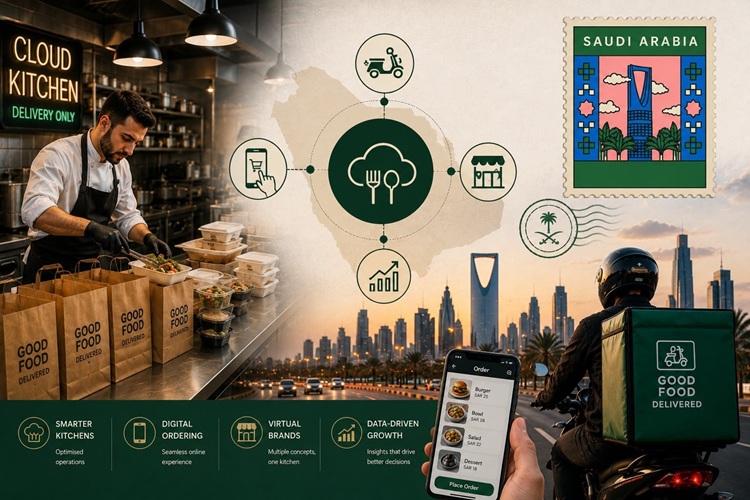
Saudi Arabia’s food and beverage industry is undergoing a significant transformation. While traditional restaurants continue to play an important role in the Kingdom’s dining culture, a new business model is steadily gaining momentum: Cloud kitchens and Delivery-first brands.
Driven by dynamic consumer habits, growing demand for convenience, and the widespread utilisation of food delivery platforms, cloud kitchens are reshaping how food businesses operate. As Saudi Arabia’s F&B sector continues to evolve, many industry experts speculate that delivery-first concepts could become one of the more influential trends shaping the future of dining.
Food delivery has become a routine part of daily life for many consumers across Riyadh, Jeddah, Dammam, and other major cities. Whether ordering lunch at the office, dinner at home or late-night snacks, customers now expect fast, reliable and seamless delivery experiences.
This shift in behaviour has created the perfect opportunity for cloud kitchens and delivery-first brands to thrive.
A New Opportunity for Food Entrepreneurs
One of the biggest advantages of the cloud kitchen model is its accessibility for entrepreneurs. Opening a traditional restaurant often requires significant investment in real estate, interior design, staffing and operational costs.
Cloud kitchens offer a more flexible alternative.
Many operators can test new concepts, launch virtual restaurant brands, and adapt their menus based on customer demand without the financial burden of operating a full-service restaurant. Some businesses even manage multiple delivery-only brands from a single kitchen, maximising efficiency while serving different customer segments.
Data Is Becoming the New Competitive Advantage
Unlike traditional restaurants that depend heavily on foot traffic, delivery-first brands have access to valuable customer data.
Operators can identify popular menu items, monitor ordering trends, analyse customer preferences and understand demand patterns across different locations. This information allows businesses to make faster and more informed decisions.
As technology continues to advance, artificial intelligence and predictive analytics are expected to play an even greater role in helping restaurants optimise operations and improve customer experiences.
What This Means for Saudi Arabia’s Hospitality Industry
The rise of cloud kitchens is not just an F&B story. It is also influencing the broader hospitality industry.
Across Saudi Arabia, changing lifestyles and growing digital adoption are reshaping dining habits, with consumers increasingly seeking faster, more flexible, and highly personalised experiences. These expectations are shaping how hotels, restaurants, and hospitality brands approach food service. Delivery-focused concepts are creating new opportunities for hotel partnerships, corporate catering, event catering, and innovative dining experiences.
As Saudi Arabia continues to invest in tourism and hospitality under Vision 2030, businesses that successfully adapt to changing consumer preferences will be better positioned for long-term growth.
The Future of Dining in Saudi Arabia
Despite the rapid growth of delivery-first brands, traditional restaurants are unlikely to disappear. Dining out remains an important social and cultural experience throughout the Kingdom. Experiences such as corporate dinners and experiential dining are an important part of Saudi Arabian F&B culture.
Instead, the future of the Saudi restaurant industry will likely be defined by a balance between physical dining experiences and delivery-driven convenience. Cloud kitchens are not replacing restaurants; they are expanding how consumers interact with food brands.
As consumer expectations continue to evolve, cloud kitchens and delivery-first brands are becoming an essential part of Saudi Arabia’s modern F&B landscape. For restaurant operators, entrepreneurs, and hospitality professionals, the trend represents more than a new business model. It reflects a broader shift in how food is prepared, delivered, and experienced in one of the Middle East’s fastest-growing markets.