


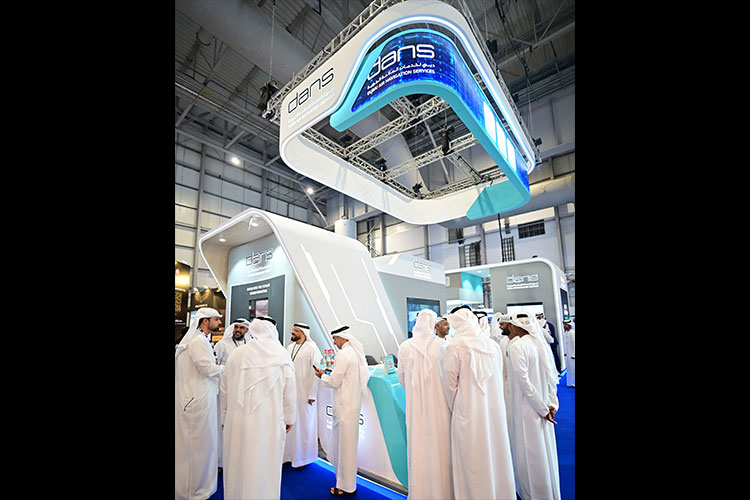
Dubai Air Navigation Services (Dubai Air Navigation Services) concluded its participation at Dubai Airshow 2025 with a series of strategic agreements, international partnerships and technology initiatives aimed at strengthening Dubai’s airspace management capabilities. The organisation’s participation included the signing of memoranda of understanding and cooperation agreements, the launch of a drone air traffic management platform, and discussions on research, training, artificial intelligence and future aviation systems.
Held in Dubai, the event provided a platform for the organisation to reinforce its commitment to developing an integrated, next-generation air traffic management ecosystem. Its activities also supported preparations for full-scale operations at Al Maktoum International Airport and aligned with the objectives of the “Aviation Talent 33” initiative, which focuses on developing a highly skilled national workforce for the future of aviation.
The announcement, dated 23 November 2025, highlighted the organisation’s efforts to strengthen international collaboration while advancing technological innovation and operational readiness. Through partnerships spanning air navigation services, academic research, simulation, digital solutions and unmanned aircraft management, Dubai Air Navigation Services outlined a broad approach to preparing for the changing demands of global aviation.
Strategic Agreements Strengthen International Collaboration
A major element of Dubai Air Navigation Services’ participation was the signing of more than six memoranda of understanding and cooperation agreements covering air navigation services, training, simulation, scientific research and technology development.
Among the agreements was a memorandum of understanding with the Bermuda Airport Authority. The partnership establishes a comprehensive framework for collaboration in air navigation services, training and simulation. These areas are important to developing operational capabilities, sharing expertise and strengthening the systems and skills required to manage increasingly complex aviation environments.
The agreement creates a basis for cooperation between the organisations, with a focus on exchanging knowledge and supporting professional development. Training and simulation can help aviation personnel prepare for different operational scenarios, while collaboration in air navigation services provides opportunities to share approaches and experience across different aviation environments.
Dubai Air Navigation Services also entered into research and academic partnerships with Emirates Aviation University and ITAérea Aeronautical Business School. These collaborations reflect the importance of education and specialised knowledge in the continued development of the aviation sector.
Academic partnerships can connect operational experience with structured learning and research. For air navigation organisations, such relationships provide opportunities to explore emerging challenges, develop professional capabilities and prepare specialists for future requirements. The involvement of educational institutions also supports the wider objective of building a workforce equipped to contribute to a rapidly evolving industry.
Additional research collaborations involved Emirates Airline and Thales. These partnerships focus on developing advanced digital solutions designed to reduce aircraft holding patterns and improve operational predictability.
Aircraft holding patterns can affect the efficiency of flight operations, making better planning and coordination important objectives for the aviation ecosystem. Digital solutions that improve predictability can support more informed operational decisions and help stakeholders manage air traffic more effectively.
The collaborations demonstrate how partnerships between air navigation specialists, airlines, technology providers and academic institutions can contribute to practical improvements. Rather than relying on one area of innovation, the agreements cover complementary priorities: operational cooperation, workforce development, scientific research and digital transformation.
Together, these partnerships form part of Dubai Air Navigation Services’ wider efforts to strengthen its capabilities and contribute to the development of a smarter, more integrated aviation environment.
Drone Air Traffic Management Platform Unveiled
One of the key announcements at Dubai Airshow 2025 was the launch of a drone air traffic management platform developed in collaboration with Dubai Aviation Engineering Projects (DAEP) and ANRA Technologies.
The platform is designed to support the management of drone operations through integrated data, improved detection capabilities and coordination mechanisms. As unmanned aircraft become an increasingly important part of aviation discussions, systems that help manage their movements are expected to play a significant role in developing safe and organised airspace operations.
According to the announcement, the platform enables instant approvals for drone operations. It also integrates radar, weather and aeronautical data, allowing relevant information to be brought together to support operational awareness and decision-making.
The integration of these data sources is intended to improve the visibility of drone activity and strengthen the ability to identify and resolve potential conflicts. The platform also enhances detection and deconfliction capabilities, helping support coordination between drone operations and the wider airspace environment.
These functions are particularly relevant as aviation authorities and operators explore how unmanned aircraft can operate alongside established aviation activities. Clear procedures, reliable information and effective coordination are important considerations when managing different types of aircraft within shared or connected airspace.
The platform is also designed to support future applications in urban air mobility. This emerging field includes potential new forms of air transportation and other aircraft operations in urban environments. As these applications develop, airspace management systems will need to support increasingly varied operational requirements.
By working with DAEP and ANRA Technologies, Dubai Air Navigation Services is combining its air navigation role with engineering and technology expertise. The collaboration illustrates how partnerships can support the development of digital tools for newer aviation activities while contributing to Dubai’s broader ambition to advance smart airspace management.
The announcement did not provide detailed information about deployment schedules, technical specifications or the full scope of future urban air mobility applications. Nevertheless, the launch establishes drone traffic management as a central part of the organisation’s technology initiatives presented at the Airshow.
Supporting Dubai’s Readiness for Al Maktoum International Airport
Dubai Air Navigation Services’ participation also reinforced its focus on operational readiness for full-scale operations at Al Maktoum International Airport.
Preparing air navigation services for the future requires attention to more than individual technologies. It also involves developing operational processes, maintaining professional standards, strengthening coordination and ensuring that personnel have the expertise needed to manage changing aviation requirements.
The agreements announced at Dubai Airshow 2025 address several of these priorities. Training and simulation partnerships can contribute to staff development, while research initiatives provide opportunities to explore new approaches to air traffic management. Digital solutions and the drone management platform represent additional efforts to improve how airspace information is integrated and used.
These workstreams are complementary. Advanced technology can provide better information and tools, but its effective use also depends on trained professionals, appropriate procedures and collaboration between relevant organisations. By pursuing partnerships across multiple areas, Dubai Air Navigation Services is working to strengthen the foundations needed for future operations.
The organisation’s focus on operational excellence is particularly important in an aviation environment where predictability, efficiency and reliable air navigation services remain central requirements. Its announced initiatives are intended to support those objectives while helping prepare Dubai’s aviation ecosystem for future demands.
The Airshow therefore served as both a platform for announcing new projects and an opportunity to demonstrate the organisation’s wider direction. Its activities connected immediate operational priorities with longer-term development in areas such as unmanned aircraft management, digital solutions, research and workforce capability.
High-Level Visit Highlights Operational Capabilities
The Dubai Air Navigation Services stand welcomed several high-level dignitaries during the event, including His Highness Sheikh Ahmed bin Saeed Al Maktoum, President of Dubai Civil Aviation Authority, Chairman of Dubai Airports, Chairman and Chief Executive Officer of Emirates Airline and Group, and Chairman of Dubai Air Navigation Services.
During his visit, Sheikh Ahmed reviewed the latest technological developments presented by the organisation and examined the operational readiness of its teams to support aerial displays and airspace management throughout Dubai Airshow 2025.
The visit highlighted the importance of coordination and operational preparedness during a major aviation event. Airshows bring together aircraft demonstrations, industry activity and significant visitor movements, requiring airspace management teams to maintain awareness and support safe, organised operations.
Sheikh Ahmed also directed the organisation to continue strengthening its operational excellence and reinforcing Dubai’s position as a global aviation capital.
His visit provided an opportunity to review the organisation’s ongoing work and the technological initiatives showcased during the event. It also underlined the relationship between innovation and operational delivery: new systems and partnerships are intended to support practical improvements in how air navigation services are planned and delivered.
For Dubai Air Navigation Services, the Airshow offered a public demonstration of its capabilities and a setting in which to engage with local and international aviation stakeholders. The combination of senior-level engagement, agreements and technology announcements reflected the organisation’s emphasis on cooperation and continued development.
Aeroficial Intelligence Partnership Advances Data-Driven Management
Another initiative announced during the Airshow was a cooperation agreement with Aeroficial Intelligence to integrate the Cockpit Suite system into Dubai Air Navigation Services’ operations.
The integration is intended to enhance data-driven performance management and support the evolution of smart airspace management in Dubai. The agreement also reflects the organisation’s continued focus on maintaining reliable and efficient air navigation services as operational requirements develop.
Data-driven performance management can help organisations assess operations through structured information and identify areas that require attention. Within an air navigation environment, this approach can support a more informed understanding of performance and help teams evaluate operational processes.
The Cockpit Suite integration adds to the broader set of digital initiatives discussed during the event. While the drone air traffic management platform focuses on unmanned aircraft operations and the research collaborations target aircraft holding patterns and predictability, the Aeroficial Intelligence agreement is directed towards performance management and the evolution of smart airspace operations.
These initiatives address different aspects of the aviation system, but share an emphasis on using technology and information to support better operational decisions.
The announcement did not detail the full implementation timetable or specific performance measures associated with Cockpit Suite. However, the stated objective is to strengthen data-driven management while maintaining the quality and reliability of air navigation services.
The partnership forms part of the organisation’s wider approach to digital transformation, in which new tools and collaborations are intended to complement operational expertise and established service requirements.
Discussions Explore Artificial Intelligence and Advanced Air Mobility
Alongside the formal agreements and platform launch, Dubai Air Navigation Services held high-level meetings with local and international entities to explore further opportunities for collaboration.
Discussions covered artificial intelligence-driven solutions, unmanned aircraft traffic management, advanced air mobility and the design of future airspace models. These topics reflect areas of growing interest across the aviation sector as organisations consider how technology, new aircraft types and changing operational needs may influence airspace management.
Artificial intelligence can support the analysis of complex information and help identify patterns within operational data. Its potential applications in aviation require careful consideration of reliability, operational requirements and the role of human expertise. Discussions about AI-driven solutions therefore form part of a wider conversation about how digital capabilities can be introduced to support air navigation services.
Unmanned aircraft traffic management was another priority. As drone operations develop, coordination systems will be important for managing activity and supporting safe integration into the broader aviation environment. The platform launched with DAEP and ANRA Technologies provided a practical example of the organisation’s work in this area.
Advanced air mobility and future airspace models were also discussed. These topics involve considering how new types of aircraft and emerging operating concepts may fit into existing or evolving airspace structures. Planning for such developments requires collaboration between aviation organisations, technology providers and other relevant stakeholders.
The meetings offered an opportunity to exchange perspectives, identify areas of shared interest and explore possible future partnerships. They also supported the organisation’s efforts to expand its international network and remain engaged with developments affecting the global aviation industry.
Knowledge Exchange with NATS Focuses on Talent Development
Among the organisations involved in discussions with Dubai Air Navigation Services was NATS, the United Kingdom’s leading air traffic services provider.
The discussions focused on knowledge exchange, leadership development and empowering emerging aviation talent. These priorities connect operational cooperation with the longer-term challenge of developing skilled professionals who can contribute to the future of air navigation.
Knowledge exchange can help organisations compare practices, share lessons from their experience and consider approaches to common operational challenges. Leadership development, meanwhile, supports the preparation of professionals for roles that require technical understanding, decision-making and effective coordination.
The focus on emerging talent also reflects the need to develop a workforce capable of responding to changing technologies and operational models. As the aviation sector explores digital tools, unmanned aircraft management and advanced air mobility, professional development will remain an important part of preparing organisations for future requirements.
The discussions with NATS complemented the academic partnerships announced with Emirates Aviation University and ITAérea Aeronautical Business School. Together, these engagements demonstrate a broad interest in learning and development, combining institutional collaboration with knowledge exchange between aviation service providers.
For Dubai Air Navigation Services, this work also supports the objectives of the Aviation Talent 33 initiative, which aims to develop a highly skilled national workforce equipped to lead the future of aviation.
Advancing the Aviation Talent 33 Initiative
The Aviation Talent 33 initiative was an important element of the organisation’s participation at Dubai Airshow 2025. Approved by the Executive Council, the initiative aims to develop national aviation professionals with the knowledge and capabilities needed to lead the sector’s future development.
Building such a workforce requires opportunities for learning, specialised training and exposure to evolving technologies and operational practices. The agreements with educational institutions, the collaboration with international aviation organisations and the organisation’s participation in specialist discussions all contribute to this wider focus on professional development.
Training and simulation can help personnel strengthen practical skills and prepare for operational scenarios. Academic partnerships can support research and structured learning, while exchanges with established aviation service providers create opportunities to share experience and develop leadership capabilities.
The initiative also connects talent development with innovation. New systems and technologies are most effective when supported by people who understand how to apply them within operational environments. Developing national expertise is therefore relevant not only to workforce planning but also to the successful adoption of advanced air navigation systems.
Ibrahim Ahli, CEO of Dubai Air Navigation Services, highlighted the connection between the organisation’s Airshow initiatives and the Aviation Talent 33 objectives. He emphasised the importance of providing an advanced environment that supports learning and growth for national talent.
This approach positions workforce development alongside operational readiness, international partnerships and technology adoption as part of the organisation’s broader priorities.
Industry Engagement and Specialist Discussions
Dubai Air Navigation Services experts also participated in specialised sessions and panel discussions during Dubai Airshow 2025. The topics included advanced air mobility, unmanned traffic management technologies, air traffic management, air traffic services, sustainability and workforce development.
These discussions provided a forum for specialists to share perspectives on the changing requirements of airspace management and the technologies being explored across the industry.
Air traffic management and air traffic services remain fundamental to the coordination of aircraft movements and the delivery of reliable aviation operations. At the same time, new technologies and emerging aircraft applications are prompting organisations to consider how systems and processes may need to evolve.
Unmanned traffic management and advanced air mobility are particularly relevant to future planning because they introduce operational questions that extend beyond conventional aircraft movements. Data integration, detection, coordination and appropriate airspace models will all be important considerations as these fields develop.
Sustainability and workforce development also featured in the discussions, reflecting the range of factors influencing aviation’s future. Technology alone cannot address every challenge; organisational capabilities, professional expertise and cooperation between stakeholders remain important to long-term progress.
Through its participation, Dubai Air Navigation Services shared forward-looking insights on airspace management and Dubai’s efforts to deploy advanced air navigation systems. The specialist engagements also complemented the formal agreements and technology announcements, helping connect individual projects with wider industry priorities.
A Broader Vision for Smart Airspace in Dubai
Dubai Air Navigation Services’ presence at Dubai Airshow 2025 brought together several strands of work: international cooperation, academic and research partnerships, digital performance management, drone traffic coordination and the development of aviation talent.
The agreements with the Bermuda Airport Authority, Emirates Aviation University and ITAérea Aeronautical Business School expanded the organisation’s collaborative activity in training, simulation, research and education. Partnerships with Emirates Airline and Thales focused on digital solutions designed to reduce aircraft holding patterns and improve operational predictability, while the Aeroficial Intelligence agreement introduced plans to integrate Cockpit Suite into operations.
The drone air traffic management platform developed with DAEP and ANRA Technologies added a practical technology initiative, bringing together radar, weather and aeronautical data to support drone operations and future urban air mobility applications.
Alongside these initiatives, discussions with NATS and other local and international stakeholders explored further opportunities in artificial intelligence, advanced air mobility, unmanned traffic management and workforce development.
Ibrahim Ahli described the Airshow as a strategic milestone in the organisation’s efforts to develop a smarter, more efficient airspace and strengthen international partnerships. He also emphasised the importance of preparing for full-scale operations at Al Maktoum International Airport and advancing the objectives of Aviation Talent 33.
Taken together, the announcements demonstrate Dubai Air Navigation Services’ intention to approach future airspace requirements through coordinated investment in technology, partnerships and people. As the aviation sector continues to evolve, these priorities will remain closely connected to the delivery of efficient, reliable and adaptable air navigation services.
The organisation concluded its participation with a clear focus on collaboration and future readiness. By combining international agreements, digital innovation, research and talent development, Dubai Air Navigation Services is working to support Dubai’s aviation ambitions and strengthen its preparedness for the next phase of global aviation.