



By Fayez Saad
Can destinations still afford to think in seasons?
For decades, tourism has operated according to a fairly predictable calendar. Summer meant beaches and school holidays. Winter meant ski resorts and warmer destinations. Certain months brought crowds, higher room rates and fully booked restaurants, while others were quietly accepted as the “off-season”. Hotels could adjust staffing, airlines could plan capacity and destinations could build their marketing calendars around the assumption that travellers would arrive at roughly the same time every year.
But what happens when those patterns become harder to predict?
The off-season may not actually be disappearing, but the traditional idea of it is beginning to look less reliable. Climate change is altering weather patterns, remote work has given some travellers more flexibility over when and how long they travel, and consumers increasingly have more information and choice when deciding when to visit. The result is a tourism industry that can no longer assume that everyone wants to travel at the same time simply because that is how the calendar has always worked.
Climate is perhaps the most visible force behind this change. Extreme summer heat is already influencing travel decisions in parts of Europe, with growing interest in cooler destinations during periods that were once considered prime holiday months. Recent reporting has highlighted rising demand for so-called “coolcations” in Nordic destinations as repeated heatwaves make parts of southern Europe less comfortable during summer. The significance for hospitality goes beyond one difficult summer. If travellers begin changing their behaviour because the weather they once expected is no longer reliable, destinations may have to rethink the relationship between climate and demand.
That could mean travelling earlier, later or somewhere completely different. A summer holiday in southern Europe might become a spring or autumn holiday. A destination that once struggled to attract visitors outside its traditional peak could suddenly become more appealing during a shoulder season. In other words, climate change isn’t simply changing where people travel. It is beginning to influence when they feel comfortable travelling there.
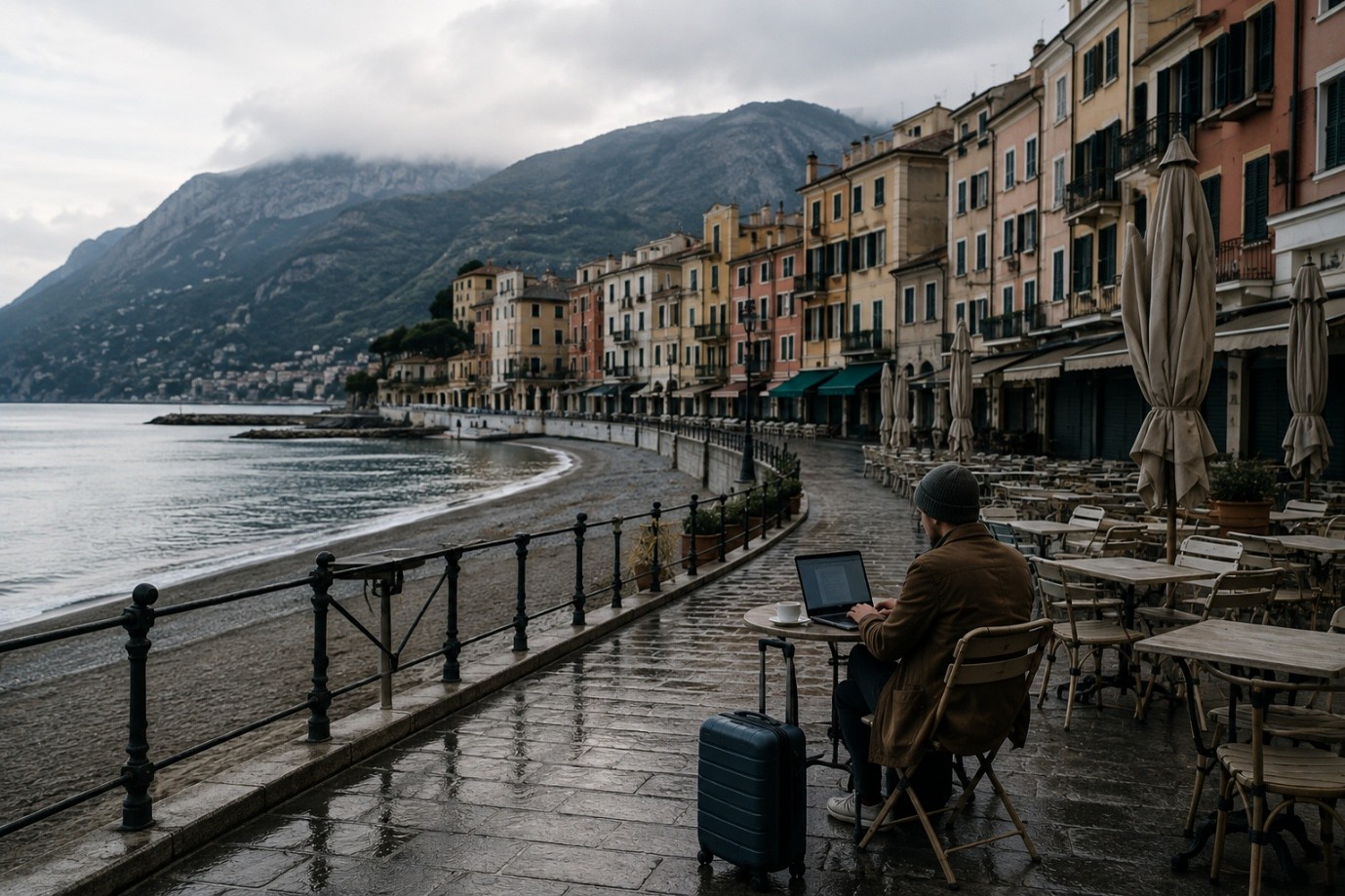
Then there is work. The traditional holiday calendar was built around a relatively simple assumption: people work in one place and take a limited number of days away from it. Remote work has complicated that equation. Someone who can work from a laptop doesn’t necessarily have to wait for a public holiday to leave town. A trip can become a two-week stay instead of a long weekend, with working days folded into the experience. Recent research into tourism in Himachal Pradesh, for example, has found that digital nomads and remote workers can contribute to off-season demand through longer stays and different accommodation needs.
This doesn’t mean remote work has suddenly turned every traveller into a digital nomad. It does, however, point towards a broader change in how people think about travel. The question is no longer always, “When can I take a holiday?” It can increasingly become, “When would I rather be there?” If flights are cheaper, attractions are quieter and accommodation is more accessible in a particular month, travelling outside the traditional peak can suddenly make more sense.
The shoulder season could therefore become more important than the off-season itself. It sits in an interesting middle ground: the weather may still be favourable, crowds may have eased and prices may be more attractive. Recent destination research is already treating shoulder-season travel as a distinct value proposition, measuring destinations around the balance between weather, crowds, accommodation prices and cultural activity. The traveller isn’t necessarily looking for the cheapest possible time to visit. They may be looking for the best balance.
For hospitality, that creates an important shift in thinking. Traditionally, the off-season has often been treated as something to survive. Hotels discount rooms, restaurants reduce operating hours and destinations increase promotional activity in an attempt to bring demand forward. But perhaps the more interesting question is not how to fill an empty season. It is how to give people a reason to visit during it.
That might mean creating wellness programmes during quieter months, developing food and cultural festivals around local calendars, attracting business and MICE travellers when leisure demand falls, or creating longer-stay products for people who don’t need to return home every Sunday night. The strategy moves from filling empty rooms to designing a destination that has something meaningful to offer at different points of the year.
Saudi Arabia provides an interesting example of this approach because different parts of the Kingdom can offer very different seasonal propositions. Aseer, for instance, is actively positioning its summer as a tourism season rather than simply accepting the hotter months as a low-demand period. Its 2026 summer programme is expected to attract more than three million visitors through events and bookable experiences, with the region positioning itself as a year-round destination.
AlUla offers another interesting perspective. Its tourism calendar isn’t built entirely around one generic peak. The destination promotes different experiences throughout the year, including dates, citrus, summer fruits and other seasonal activities connected to the oasis and local culture. The Royal Commission for AlUla also describes the destination as year-round, with October to April particularly active while noting opportunities for outdoor experiences during summer evenings. The point isn’t that every month suddenly becomes equally attractive. It is that the destination can create different reasons to visit at different times.
That distinction may become increasingly important. A destination doesn’t necessarily need twelve months of peak tourism. It needs a healthier distribution of demand. There is a difference between eliminating seasonality and managing it better.
In fact, the off-season could eventually become part of the product rather than something destinations try to hide. Fewer visitors can mean quieter attractions, more availability, more personal service and a different relationship with the destination. For some travellers, that is precisely the appeal. The period once considered undesirable may become the period people deliberately choose because they don’t want the crowds that come with peak season.
There is a warning here, however. If every destination tries to eliminate its off-season completely, the result could simply be twelve months of pressure. More visitors mean more demand for accommodation, transport, water, energy, public spaces and local infrastructure. Some destinations are already learning that the answer to overtourism isn’t always to find another way to bring more people in. Sometimes it is to distribute visitors more intelligently across time and space.
That may be the real future of seasonality. Not its disappearance, but its transformation.
The old tourism calendar asked a simple question: When is our peak season?
The new one may need to ask several more.
When is the weather most comfortable? When do local communities have capacity? When can infrastructure handle demand? When can travellers find something they cannot experience at another time? And perhaps most importantly, what reason are we giving people to come now rather than later?
The off-season isn’t necessarily dead.
But the assumption that travellers will always follow the same calendar might be.
And for an industry built around knowing when people will arrive, that could be one of the biggest changes hospitality has to prepare for.