



For travelers seeking a distinctive summer escape, Japan’s Tohoku region combines vibrant festivals, deeply rooted traditions, and interactive cultural activities. Located in northern Japan, the region is known for its cooler summer temperatures and a wide range of experiences away from Japan’s major cities, making it an appealing destination during the peak travel season.
Early August is the ideal time to visit, as major summer festivals take place across Aomori, Akita, and Yamagata prefectures. Each presents a different experience, from giant illuminated floats to lantern-balancing performances reaching 12 meters, and large-scale dance parades, all rooted in traditions passed down through generations.
Beyond the festivals, Tohoku also provides opportunities to experience traditional ways of life connected to local communities and the natural environment. Visitors can discover rural landscapes and traditional customs, offering a different side of Japan beyond its major cities.
Together, these experiences combine seasonal festivals, long-standing traditions, and tranquil mountain retreats.
Aomori Nebuta Festival – Giants of Light Fill the Summer Night
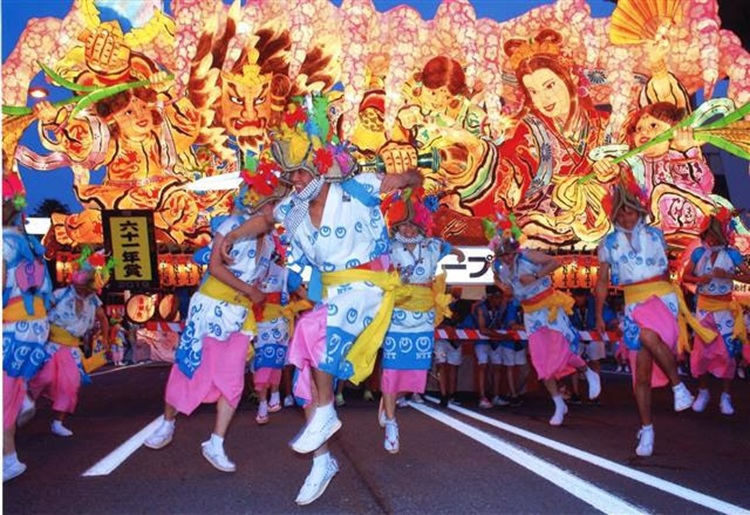
Held annually from 2–7 August, the Nebuta Festival transforms central Aomori into one of Japan’s most spectacular summer events. It is known for its enormous illuminated floats depicting warriors, mythical figures, and scenes from Japanese history and folklore, many of which are designed over the course of the year and crafted in roughly three months by local artisans.
Towering lantern floats move through the streets after sunset, when the event reaches its peak. Taiko drummers and musicians create rhythms that echo across the parade route, shaping the flow of the procession. Haneto dancers follow in colorful costumes, jumping and chanting in rhythm as they move alongside the floats.
Their coordinated movements add energy and a sense of scale, while their chants resonate through the streets. Visitors are not limited to watching. Those who wear the traditional haneto costume can join the parade and take part directly in this long-standing tradition.
The Nebuta Festival stands out as one of Japan’s signature summer events and provides an engaging introduction to the traditions of northern Japan.
Akita Kanto Festival – Mastering Balance Under Hundreds of Lanterns
Held annually from 3–6 August in Akita, the Akita Kanto Festival originated as a prayer for a successful harvest. The event showcases performers balancing tall bamboo poles lined with rows of glowing paper lanterns that symbolize golden ears of rice.
Performers raise and support structures reaching up to 12 meters in height using only their hips, shoulders, or foreheads, demonstrating a high level of balance and precision.
After sunset, hundreds of lanterns illuminate the streets as the poles are raised one after another along the parade route, creating a memorable spectacle that reflects both technical mastery and a tradition rooted in prayers for a successful harvest.
The Kanto Festival highlights this balance of technique and tradition, offering a clear contrast to the scale and movement of other summer festivals in the Tohoku region. Following the opening days of the Nebuta Festival in neighboring Aomori, visitors can continue to Akita to experience the Kanto Festival.
Yamagata Hanagasa Festival – Join the Rhythm of Yamagata
After the dramatic floats of Aomori and the precision performances of Akita, Yamagata offers a festival centered on joy, movement, and community participation. Held annually from 5–7 August, the Hanagasa Festival brings together thousands of dancers who parade through the city carrying colorful flower-decorated hats, known as hanagasa, creating a lively and visually striking procession.
Originating from work songs once sung during local construction projects, the festival has evolved into one of Tohoku’s largest dance festivals. Today, groups representing schools, companies, community organizations, and local associations perform choreographed dances through the city center, filling the streets with rhythm and energy.
Beyond its colorful performances, the Hanagasa Festival is celebrated for its welcoming and inclusive spirit. The lively chants of “Yassho, Makasho!” echo throughout the city, while waves of dancers move in unison, creating an atmosphere that is both festive and inviting. As the parade draws to a close, visitors are encouraged to join the dancing themselves, offering a rare opportunity to engage directly with a living local tradition.
Serving as a vibrant finale to Tohoku’s summer celebrations, the festival highlights the region’s strong sense of community, warmth, and hospitality.
Step Back in Time at Tono Furusato Village
While Tohoku’s summer festivals showcase the region’s vibrant energy and traditions, visitors can also discover a quieter, more reflective side of northern Japan in Iwate Prefecture. Surrounded by forests and rice fields, Tono Furusato Village offers an opportunity to experience the lifestyle and culture of rural Japan in a setting that preserves the atmosphere of a traditional farming community.
One of the village’s most distinctive features is its collection of historic Magariya, traditional L-shaped farmhouses unique to the Tono region. These architectural structures were designed to house both people and horses under the same roof, reflecting the close relationship between local communities and their working animals. Walking through the village, visitors can step inside these preserved homes and gain insight into everyday life in rural Tohoku around 150 years ago.
A variety of hands-on activities adds depth to the visit, particularly for families and those seeking a deeper cultural connection. Local guides known as Maburitto share stories about village life, regional customs, and the folklore for which Tono is widely known. Through traditional craft workshops and seasonal activities, visitors can engage directly with the area’s living cultural heritage while learning about traditions that continue to be passed down through generations.
Rather than simply observing exhibits, guests are encouraged to experience Tono’s traditions firsthand. The combination of historic Magariya, interactions with Maburitto storytellers, and the peaceful natural surroundings creates an immersive cultural setting that offers a different perspective away from Japan’s urban centers.
For travelers exploring the festivals of Aomori, Akita, and Yamagata, a visit to Tono Furusato Village provides a meaningful opportunity to discover another side of Tohoku—one shaped by rural traditions, folklore, and community life.
Mountain Serenity and Luxury at CHIKUSENSO Mt. Zao Onsen Resort & Spa
Nestled at the foot of Mt. Zao in Miyagi Prefecture, CHIKUSENSO Mt. Zao Onsen Resort & Spa is an elegant retreat surrounded by forests, mountain streams, and expansive scenery. Set within spacious grounds, the property offers a quiet environment where guests can relax after exploring the cultural and natural attractions of the Tohoku region.
The resort’s guest rooms blend traditional Japanese craftsmanship with contemporary design, incorporating natural materials to create a calm and refined atmosphere. Spacious rooms and suites are furnished with premium bedding for enhanced comfort, while select suites feature private onsen, allowing guests to enjoy the hot spring experience in a more exclusive setting.
Onsen bathing is at the heart of the CHIKUSENSO stay. The resort features indoor and outdoor hot spring baths, as well as private outdoor onsen available by reservation. Guests can also enjoy spa relaxation treatments, adding a wellness element to their stay in the Zao mountains.
Dining is another highlight. At Kamajin, the resort’s Japanese restaurant, guests can enjoy Kaiseki cuisine prepared with fresh regional ingredients, including Sendai beef, locally grown vegetables, and seafood from Miyagi Prefecture. Through its combination of hot springs, refined cuisine, spacious accommodations, and serene natural surroundings, CHIKUSENSO offers a luxurious retreat that complements a summer journey through Tohoku.