


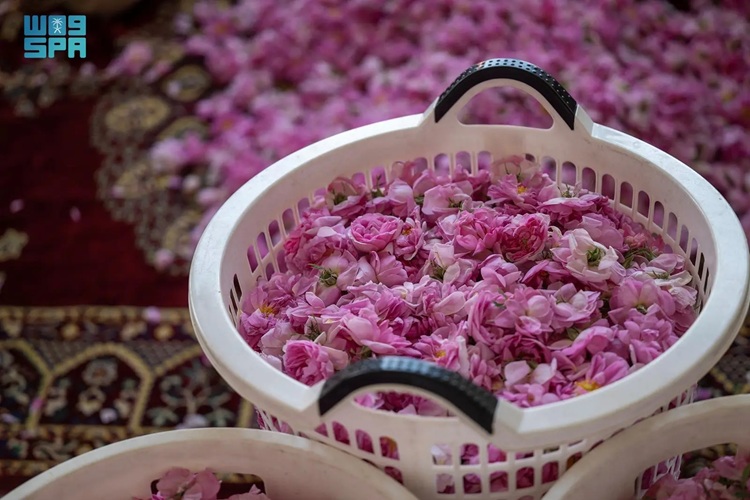
Taif SPA — The production of Taif rosewater is one of the oldest and most treasured agricultural crafts in Taif Governorate. It is closely tied to the rose harvest season, which lasts approximately 45 days each spring, during which roses are carefully picked in the early morning to preserve their delicate aromatic oils.
Farmer Ali Al-Sheikh explained that the distillation process begins by transporting the freshly picked roses from farms to traditional distilleries, locally known as “cooking pots.” These large copper vessels are filled with precise quantities of roses and water, then tightly sealed and placed over moderate heat. As the mixture boils, aromatic oil-infused vapors are released.
How Taif rosewater is made
These vapors travel through pipes into cooling vessels, where they condense into a fragrant liquid. The result is pure rosewater and rose oil, the latter of which is considered one of the most expensive essential oils in the world.
Al-Sheikh noted that Taif rosewater has diverse uses, most prominently in perfumes, incense, cosmetics, and skincare products. It is also utilized in the food industry, from traditional sweets and beverages to popular recipes, showcasing its cultural and economic significance.
Taif Rose Season and Its Agricultural Heritage
Taif’s rose season is an important part of the governorate’s agricultural identity, attracting attention to a craft that has been passed down through generations. The region’s rose farms are closely associated with the annual spring harvest, when farmers carefully collect blossoms before the heat of the day affects their delicate fragrance.
The harvest typically lasts around 45 days, making timing essential for growers and distillers. Early-morning picking helps preserve the roses’ aromatic qualities before they are transported to traditional distilleries for processing. This close connection between cultivation and production demonstrates how local knowledge continues to shape the quality of Taif rosewater.
For farming communities, the season also represents an opportunity to preserve agricultural traditions while supplying ingredients used in fragrance, personal care and food products. The rose harvest has become a distinctive feature of Taif’s cultural identity, linking its landscape with a product recognised for its aroma and versatility.
Traditional Distillation Preserves the Rose’s Fragrance
The production process relies on carefully managed heating and condensation. Freshly harvested roses are placed in large copper vessels, commonly known locally as cooking pots, with measured quantities of water. Once sealed and heated, the mixture releases vapours carrying aromatic compounds from the rose petals.
These vapours pass through pipes into cooling vessels, where they condense into liquid. The resulting products include rosewater and rose oil, which can be separated and used for different purposes. Careful handling throughout the process is important because the fragrance and quality of the final product depend on the roses and the distillation method.
Although modern equipment can support essential-oil production, traditional techniques remain an important part of Taif’s rosewater story. The use of copper vessels and established distillation practices reflects the continued value of local expertise in producing a recognisable regional product.
From Perfumes to Food: The Many Uses of Taif Rosewater
Taif rosewater is valued across several industries. In perfumery, its floral aroma makes it a useful ingredient in fragrance compositions, while rose oil is sought after for its concentrated scent. Rose-derived ingredients are also used in cosmetics and skincare products, where they contribute fragrance and are incorporated into a range of personal-care formulations.
Food is another important area of use. Rosewater can add a delicate floral note to traditional sweets, desserts and beverages, making it a familiar ingredient in regional culinary traditions. Its versatility allows producers and chefs to incorporate the distinctive aroma into both established recipes and contemporary creations.
Preserving a Distinctive Saudi Tradition
Taif’s rosewater industry demonstrates how agriculture, craftsmanship and cultural heritage can come together in a single product. By continuing to cultivate roses and maintain distillation knowledge, local producers help preserve a tradition with both cultural and commercial value.
As interest in regional ingredients and heritage products grows, Taif rosewater remains a distinctive expression of Saudi Arabia’s agricultural identity, connecting the spring harvest with fragrance, food and everyday cultural practices.
Related reading: Taif Tourism Minister Inspects Governorate After Red Sea Vacation

Ahmed Abdul Wasey
Managing Editor, Eat ‘N Stays
Ahmed Abdul Wasey is the Managing Editor in Eat ‘N Stays, overseeing all editorial coverage of travel, hospitality, and food across Saudi Arabia and the wider Gulf region. He sets the publication’s editorial direction and reviews coverage across hotels, restaurants, tourism, cruise, and industry news before it publishes.
Have a story tip, correction, or question about our coverage? Reach Ahmed directly at pr@eatnstays.com.