

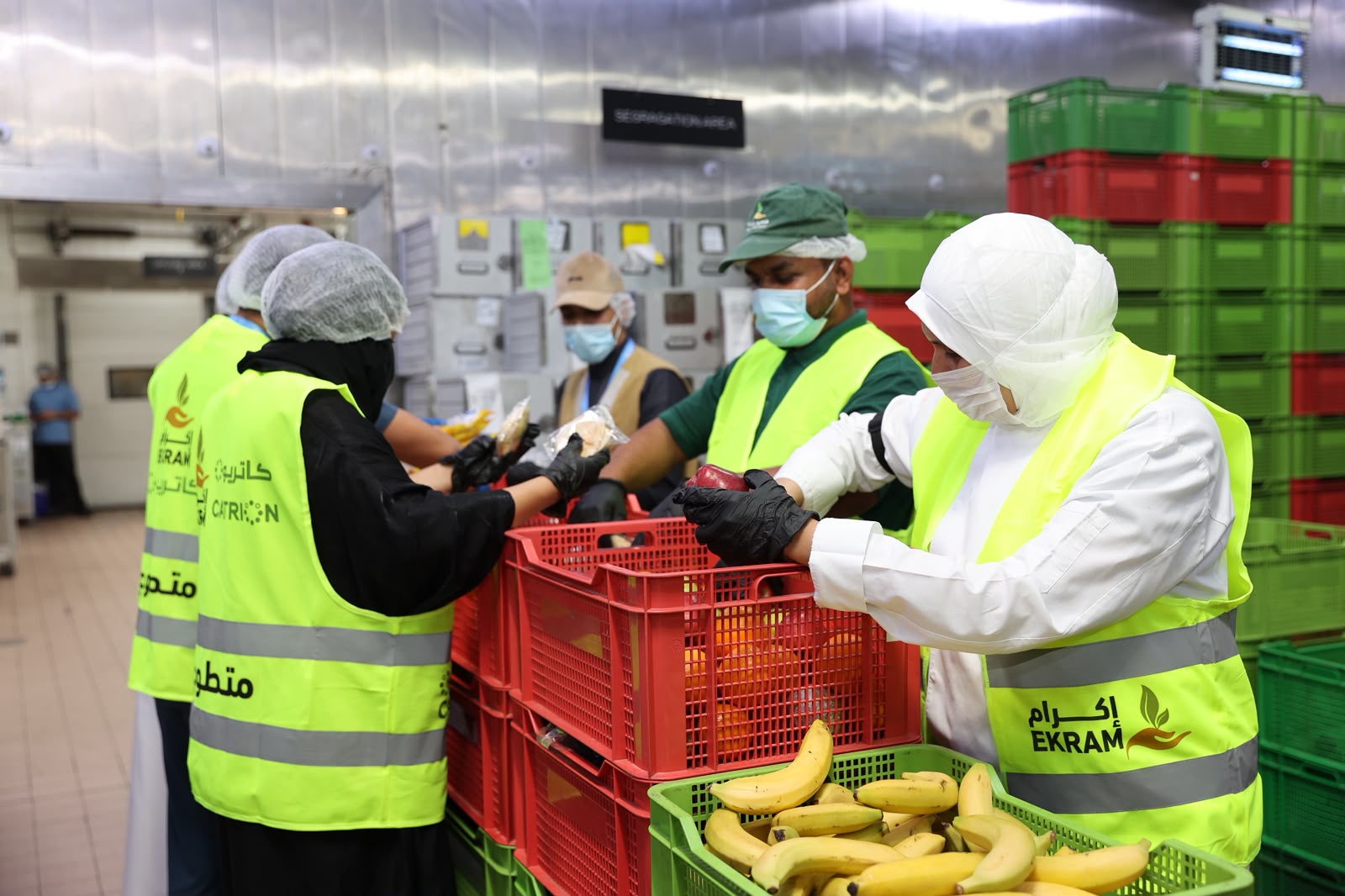
Jeddah : Caterion Catering Holding Company and Ikram Food Bank have marked a renewed partnership, celebrating the redistribution of over 11 million food items over the past two years. The collaboration underscores a shared commitment to food preservation, food security, and waste reduction, directly supporting Saudi Arabia’s Vision 2030 goals.
Rooted in Caterion’s dedication to environmental, social, and governance (ESG) principles, the initiative transforms surplus but still-edible food into meaningful community support. What began in Jeddah has now expanded to Riyadh, Dammam, and Madinah, with a joint roadmap to broaden access and deepen impact across the Kingdom.
What the Ikram Food Bank partnership has achieved
Eng. Ziyad Al-Harbi, Executive Director of ESG at Caterion, stated:
“The sustainability of this partnership reflects the continued success we’ve achieved since day one. Together with Ikram Food Bank, we’ve built an integrated system to recover, verify, and safely redistribute unused food according to the highest safety standards. This initiative is a practical model that merges environmental stewardship, food security, and community service—turning ESG principles into tangible outcomes.”
Dr. Ahmed bin Harbi Al-Mutrafi, Chairman of Ikram Food Bank, added:
“This partnership has expanded our ability to serve diverse communities, including providing quality services to pilgrims. It exemplifies how institutional collaboration can drive sustainable development and elevate the non-profit sector’s role in improving quality of life.”
To date, the initiative has conducted over 4,000 redistribution operations, benefiting more than 9 million people. Cooperation extends to seasonal efforts during Ramadan and Hajj, including iftar meals at the Grand Mosque in Mecca and services at the Prophet’s Mosque in Medina, as well as support for underprivileged families. The partnership also includes community empowerment programs focused on skills development and women’s empowerment, alongside volunteerism initiatives that strengthen social participation.
By maximizing the use of edible surplus food, the project supports circular economy principles, reduces environmental waste, and delivers measurable social returns. In recognition of its impact, the initiative received the Gulf Sustainability Award for Best Social Initiative of 2025.
As of mid-2026, the partnership continues to evolve, with Caterion reaffirming its commitment to expanding social programs and deepening ties with non-profit organizations. Building on past achievements, both entities aim to develop sustainable models that deliver lasting value, reinforce Vision 2030, and cement Caterion’s role as a proactive partner in community service and resource conservation.
Reducing Food Waste Through Sustainable Partnerships
The collaboration between Catrion and Ikram Food Bank demonstrates how coordinated food recovery initiatives can address two important challenges: reducing avoidable food waste and improving access to food for communities in need. By establishing processes to collect, assess and redistribute surplus edible food, the partnership helps ensure that usable resources reach people rather than being discarded.
Food waste can place additional pressure on waste management systems and contribute to environmental impacts when discarded food decomposes in landfills. Recovering suitable surplus food offers a practical way to reduce waste while supporting community welfare. Effective redistribution, however, depends on careful handling, appropriate storage, food safety checks and reliable coordination between participating organisations.
Supporting Saudi Arabia’s Vision 2030
The initiative also reflects the broader objectives of Saudi Vision 2030, particularly its emphasis on sustainability, community participation and improving quality of life. Expanding the partnership across Jeddah, Riyadh, Dammam and Madinah creates opportunities to reach more beneficiaries while strengthening cooperation between businesses and non-profit organisations.
Seasonal initiatives during Ramadan and Hajj are especially significant, as demand for food services and community support can increase during these periods. Coordinated redistribution can help direct resources towards vulnerable families and support feeding programmes serving pilgrims.
Looking ahead, continued investment in food recovery systems, volunteer participation and community empowerment could further strengthen the initiative’s impact. By combining operational expertise with charitable outreach, Catrion and Ikram Food Bank demonstrate how private-sector and non-profit partnerships can turn sustainability commitments into practical benefits for people and the environment.
Related reading: Catrion Holdings Wins Two Regional Awards at FAB World Hospitality Awards 2026 | Caterion Expands Operations for Hajj 1447 AH: Full Catering & Hospitality in Holy Sites

Ahmed Abdul Wasey
Managing Editor, Eat ‘N Stays
Ahmed Abdul Wasey is the Managing Editor in Eat ‘N Stays, overseeing all editorial coverage of travel, hospitality, and food across Saudi Arabia and the wider Gulf region. He sets the publication’s editorial direction and reviews coverage across hotels, restaurants, tourism, cruise, and industry news before it publishes.
Have a story tip, correction, or question about our coverage? Reach Ahmed directly at pr@eatnstays.com.